
30 June 2026 · 3 min
What NZEB and Class A4 Mean for a Buyer
A plain-language guide to the labels on a modern home, and to the one number that tells you what a house will actually cost to run.
Domus Sapientes editorial team, with technical supervision by Tombari Costruzioni · Articles are drafted with the help of AI tools and reviewed by the team before publishing. Every technical claim is checked against the project specification.
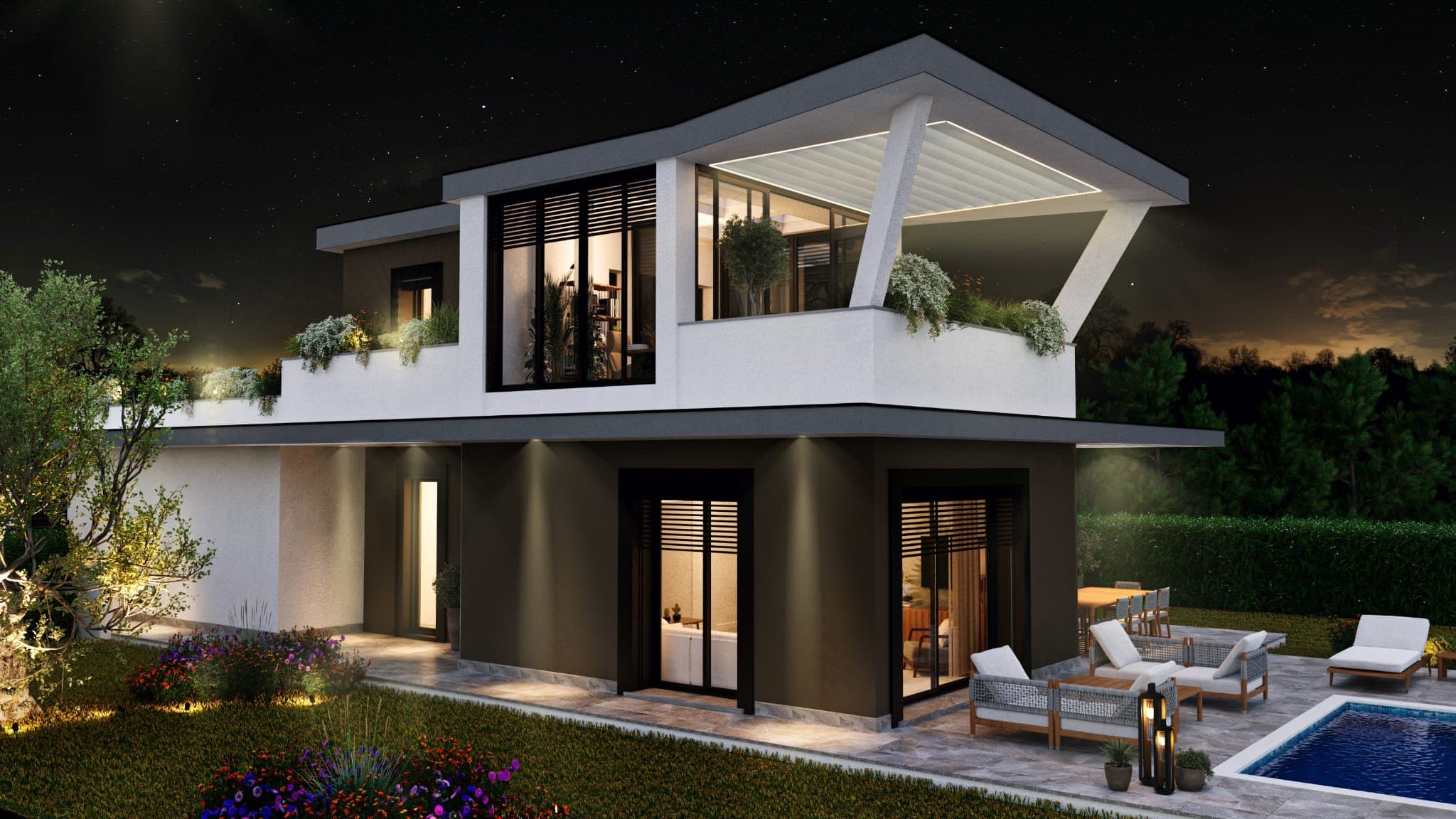
Building labels promise much and explain little. NZEB, class A4, EPgl: a buyer meets them all at once, usually without a translation. It is worth making one, because behind those letters lies the difference between a house that weighs on the budget every month and one that is barely felt.
NZEB, in plain words
NZEB stands for Nearly Zero Energy Building. Behind the acronym sits a simple idea: a house that needs almost no energy to stay comfortable, and that produces most of the little it needs from renewable sources on its own site. The definition comes from European building law, and every member state has written it into national rules. In Italy a home earns the label only when insulation, systems and renewable production all clear strict thresholds together.
For a buyer, the practical result is peace of mind. The house works in the background. Warmth in January and cool air in August come from the sun on the roof and the steady temperature of the ground, and consumption barely moves in either season.
Ten classes, and why A4 sits at the top
Every home sold in Italy carries an energy performance certificate, the APE, which places the building in one of ten classes running from G at the bottom to A4 at the top. Much of the existing housing stock sits in the lower half of that scale, built in decades when energy was an afterthought. A4 is the highest class the certificate can award. There is nothing above it.
The class is a summary. The number underneath it is EPgl,nren, the global non-renewable energy performance index. It states how much non-renewable energy the building draws in a year, per square metre of floor, to deliver heating, cooling, hot water and ventilation. The villas of Domus Sapientes come in at 14.59 kWh per square metre per year. An older, uninsulated house can need many times as much to get through the same twelve months.
What the number does to your bills, and your rooms
A figure on a certificate matters when it reaches the kitchen table. The thermal calculations for these villas put the operating cost at about 48 euro a month, and that single figure covers heating, air conditioning, domestic hot water and controlled mechanical ventilation. Budgeting for the house becomes easy, the same small number in February and in August.
Comfort follows the same physics. We think of the home as a third skin, after the body and clothing, and a skin should breathe. Walls of hemp-lime blocks do exactly that, holding their temperature so surfaces stay mild to the touch. A Canadian well tempers incoming air with the stable warmth of the ground, winter and summer, while the mechanical ventilation renews the air continuously through an integrated heat exchanger. Solar screens on every window stop summer heat before it reaches the glass. A 7.08 kW photovoltaic system and 15 kW of storage batteries meet much of the electrical load, so low consumption is matched by production at home.
What to ask any builder
These questions travel well beyond this project. Ask for the EPgl,nren figure in writing, since the class alone hides the detail. Ask which class the house achieves before optional extras are added. Ask whether comfort comes from the fabric of the building, its walls, windows and ventilation, or from machinery bolted onto an ordinary shell. Ask for an operating cost derived from thermal calculations, with the documents behind it. And ask how the house will feel in a heatwave with the systems switched off, because good fabric keeps working when the equipment is off. A builder who has done the work will answer with documents, and the answers will sound like the ones above, including the option of CasaClima Nature certification, which adds environment, health and wellbeing criteria to the energy figures.
The three villas of Bosco Orizzontale in Borgo a Buggiano were designed around these numbers. When you are ready, come and read them in person. The project is at www.domussapientes.it.
Curious how this reads in a real house?
Three hemp and lime villas in Borgo a Buggiano, under construction, three available. The specification and the reserved price list arrive within 24 hours to anyone who requests them.
Compare TOP and LIGHT